1
Footings for Clay Soil
Denton clay swells when wet and shrinks when dry. A shallow ring of stone follows that movement. The pit footing is dug below the active soil zone, set on a compacted base, and the surround stays level year after year.


A division of The JBN Group, Inc.
Custom stone fire pits built for Denton yards.
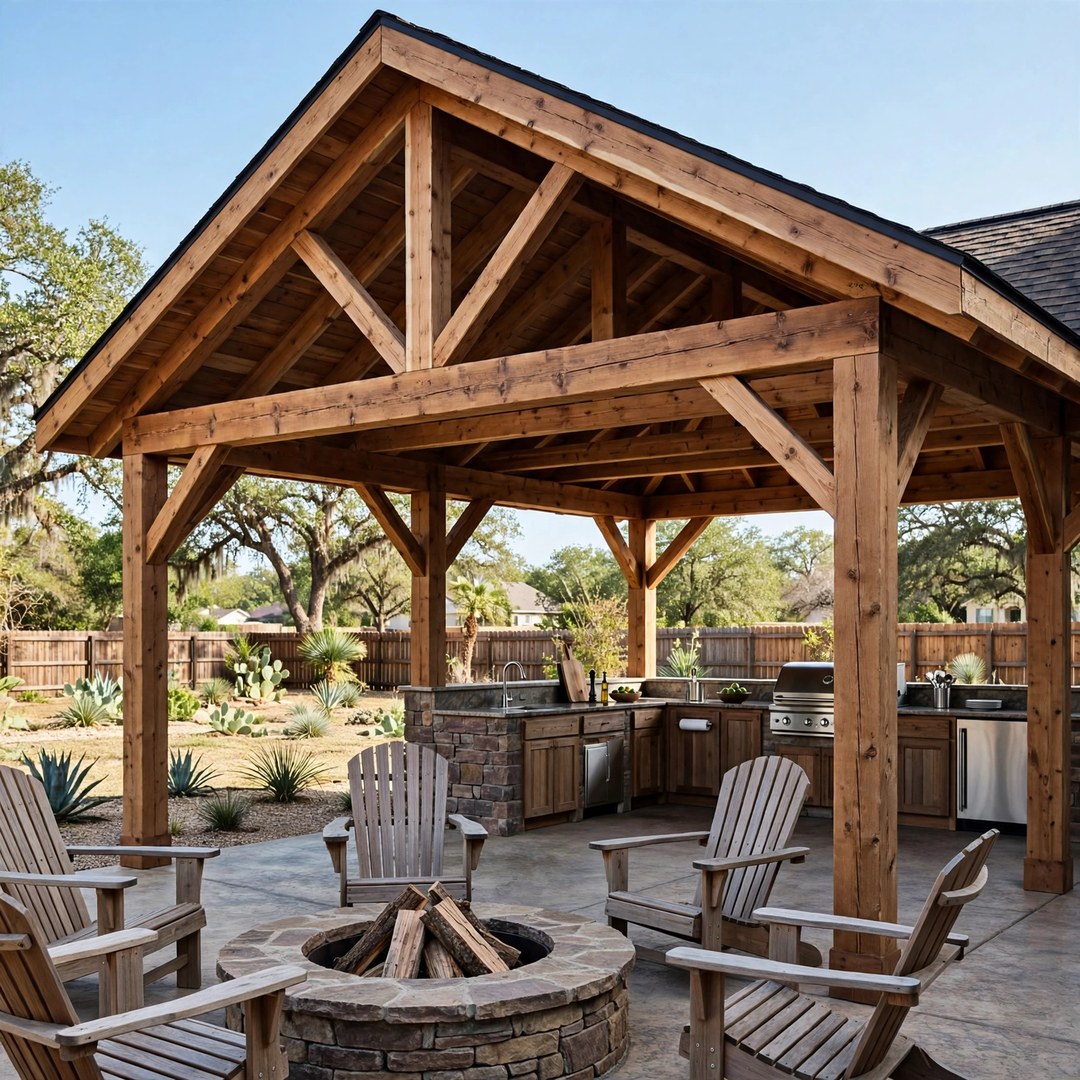
Denton Patio Covers designs and builds custom stone fire pits for homes in Denton and nearby North Texas communities. Choose a simple standalone pit on an existing patio or a pit planned as part of a full outdoor living space. Every pit sits on a proper footing, is sized to the seating, and is priced in one written proposal.
Simple or part of the whole
A metal bowl from a big-box store works for a season or two until it rusts, tips on uneven stone, or sits too low for the chairs around it.
A built fire pit fixes the fire permanently. The bowl sits in real stone at a height that matches the seating. The footing keeps it level in clay soil. Placement is measured from the house, cover posts, and property line before anything is dug.
We design every pit on your patio, size it to your seating, and price it as one written number. If a fireplace or outdoor kitchen is also in the plan, the pit is placed with those elements from the start.
Call 972-893-3385 and tell us where the fire should go.
What we build
Every pit is set in stone or concrete on its own footing by the same crews that build our covers and outdoor kitchens. A well-placed pit often anchors a full backyard plan. See how the pieces fit together on our Outdoor Living Spaces page.
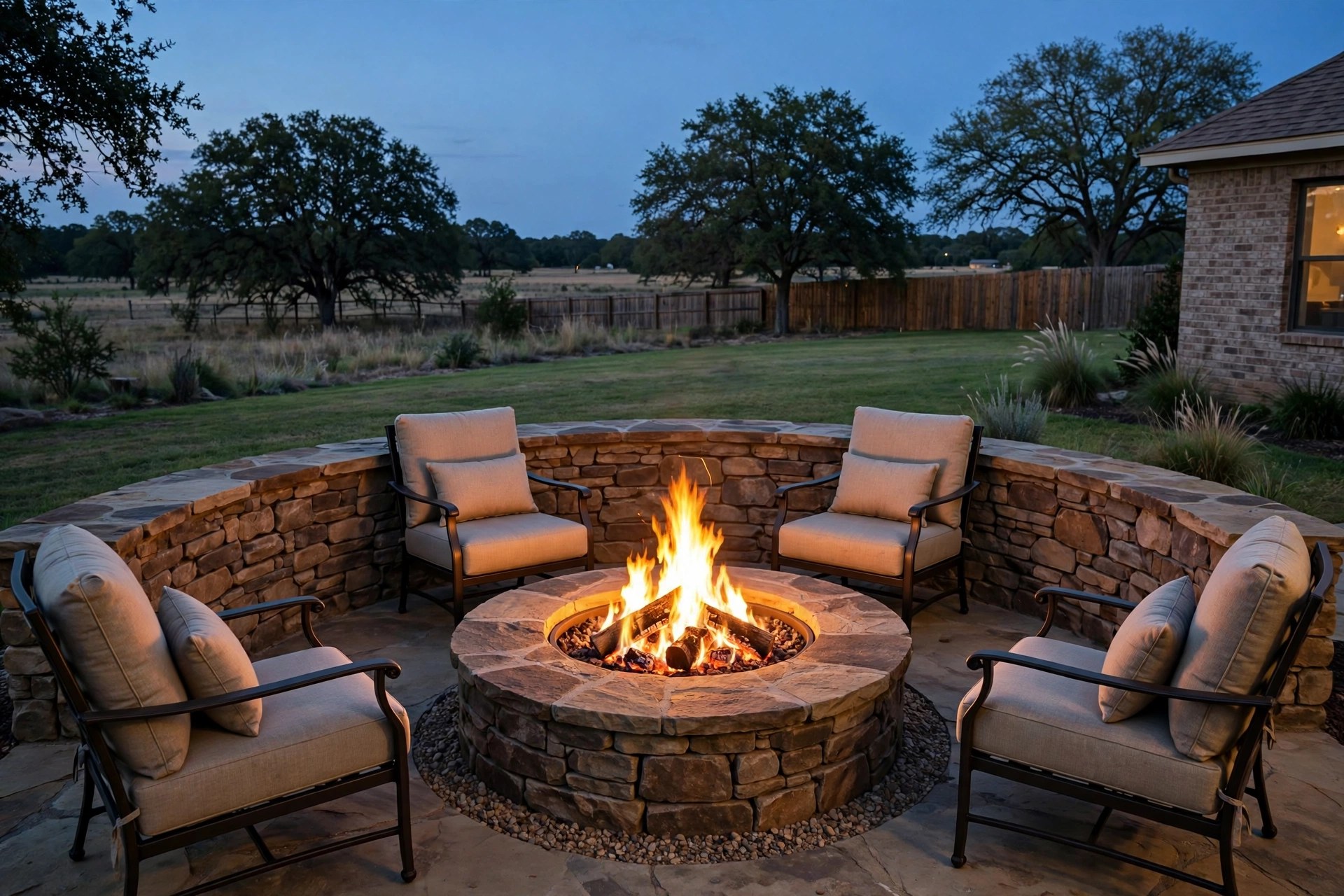
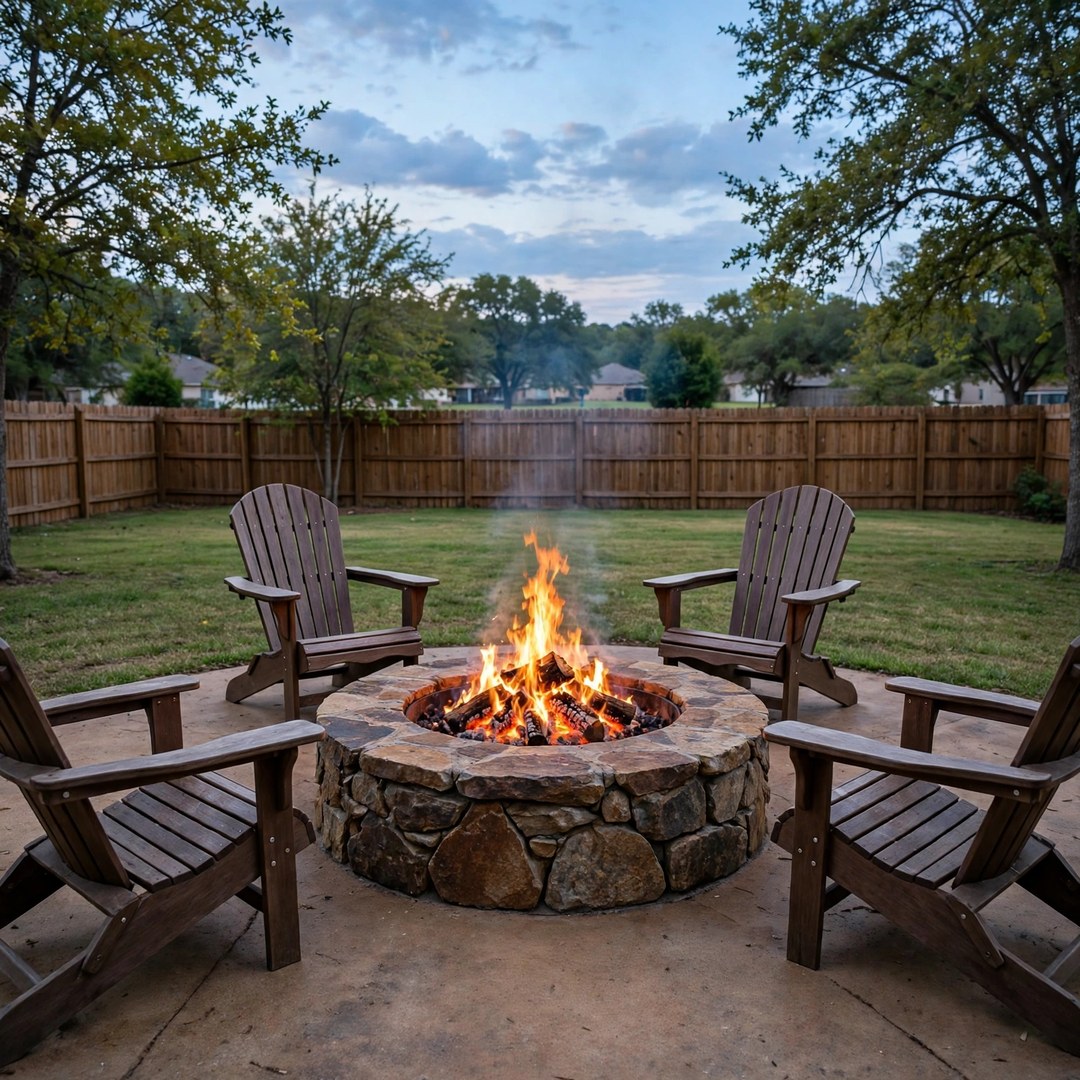 Standalone Fire Pits
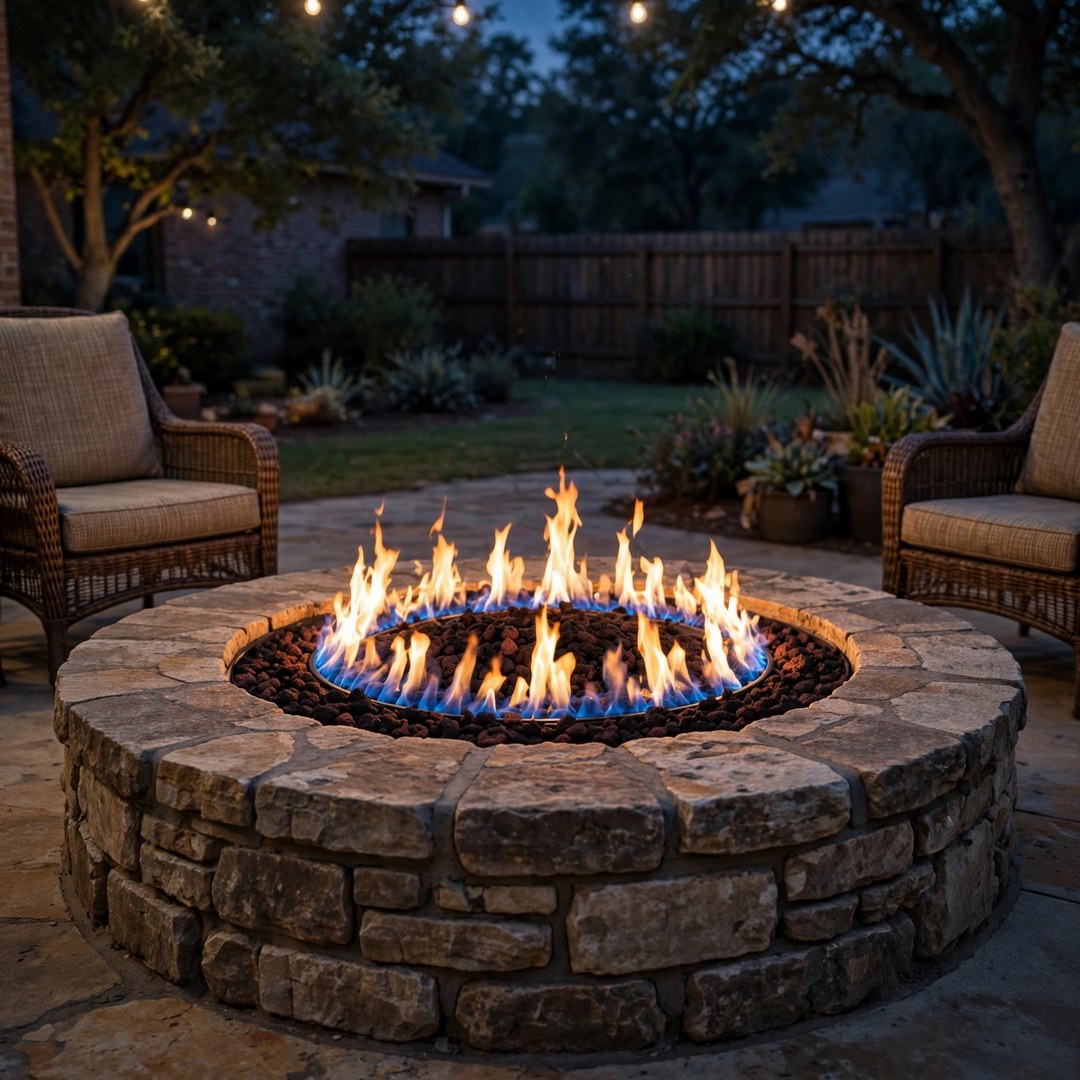 Gas Fire Pits
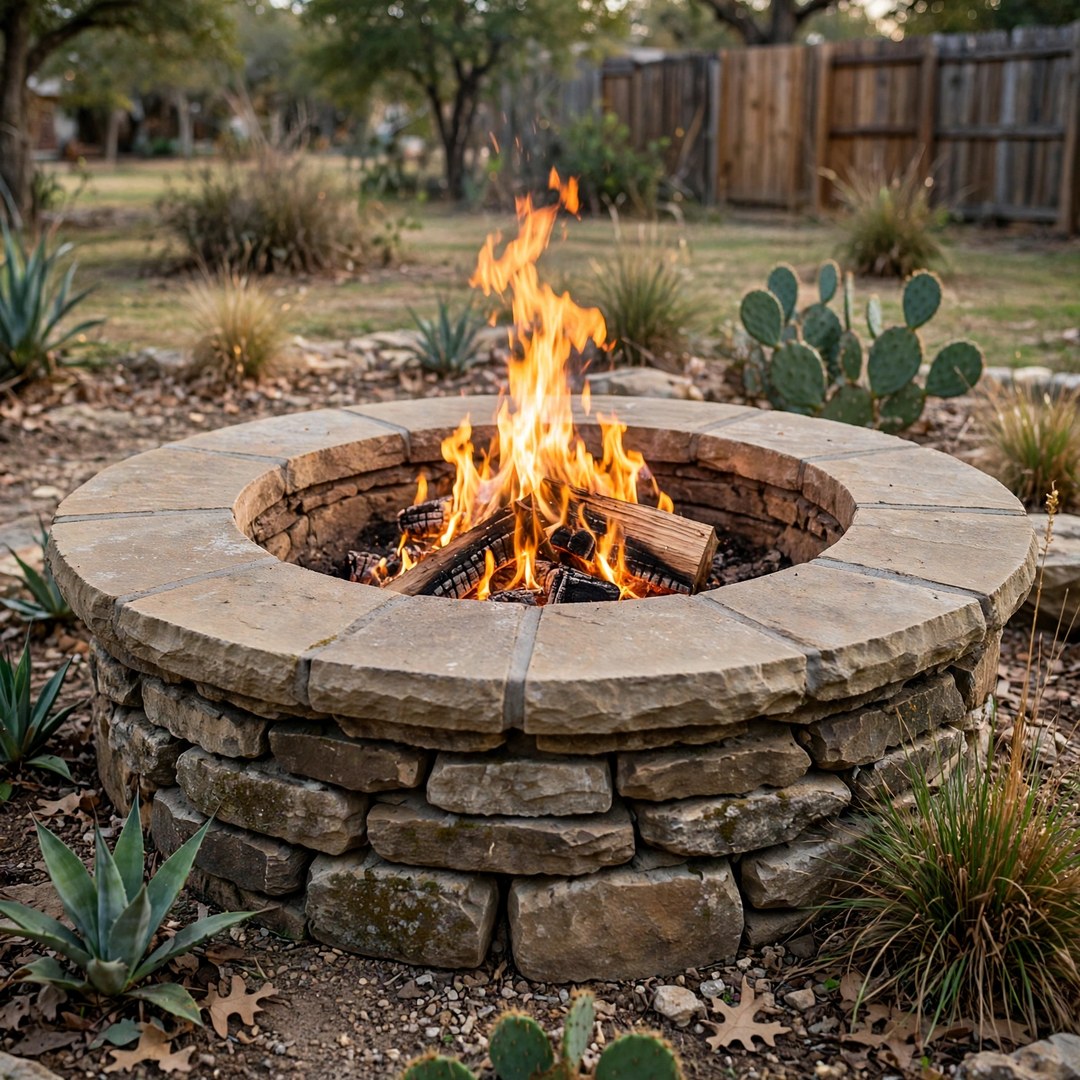 Stone and Concrete Surrounds
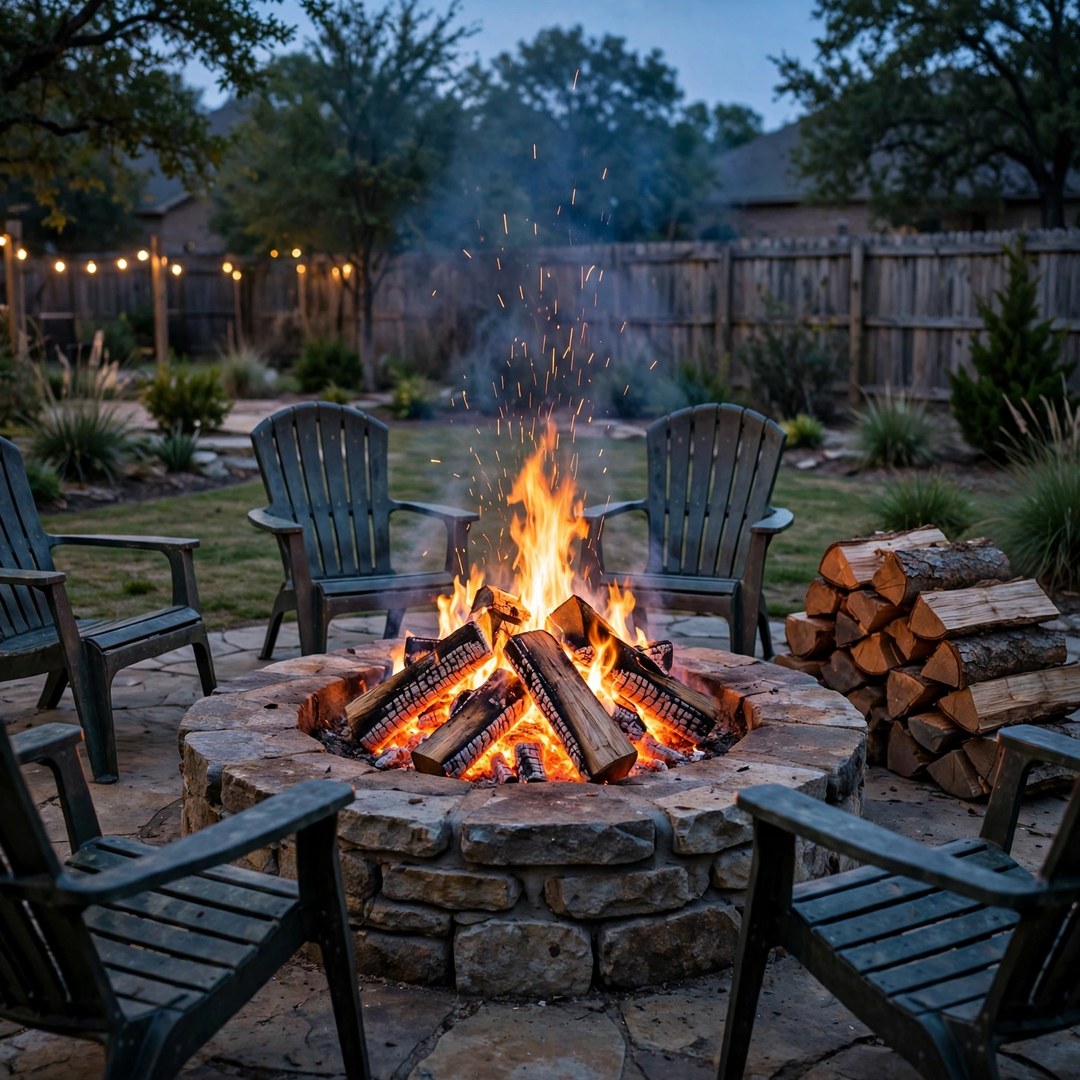 Wood-Burning Fire Pits
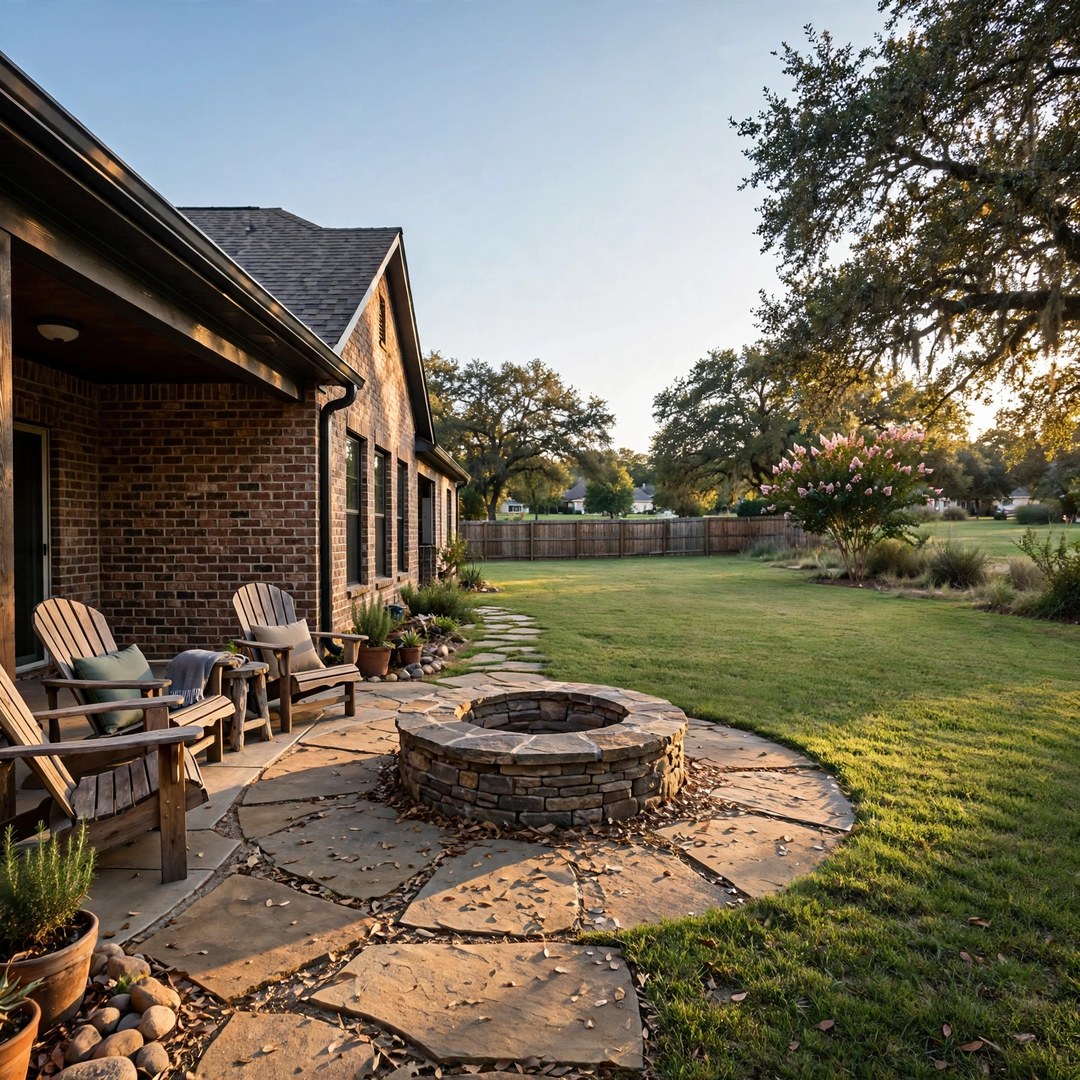 Placement and Seating
Built to stay put
Fire pits fail in the details: a ring that leans after one wet winter, a bowl that holds rainwater, or a gas line that was never planned. These six points are settled on every pit before the first stone is set.
Denton clay swells when wet and shrinks when dry. A shallow ring of stone follows that movement. The pit footing is dug below the active soil zone, set on a compacted base, and the surround stays level year after year.
The surround is stacked stone or poured concrete chosen to match the house and the rest of the backyard work. Both materials handle heat and weather without the rust failure common to thin steel bowls.
A gas pit lights on a switch and requires a line run during the build. A wood pit needs no line, only dry storage for firewood and room for ash. The choice is made at the design visit so the build includes the correct system.
A pit for two chairs is a different build from a pit inside a seating wall for ten. Bowl size and cap height are set by how many people the circle holds so no one sits too far from the heat or too close to it.
An open bowl catches every rain. The base is built to drain so the pit dries between fires instead of holding a puddle of ash water for days.
The wide stone cap earns its keep. Drinks and plates sit on it between fires. Feet rest on it during them. A cover over the top keeps rain out when the pit is idle.
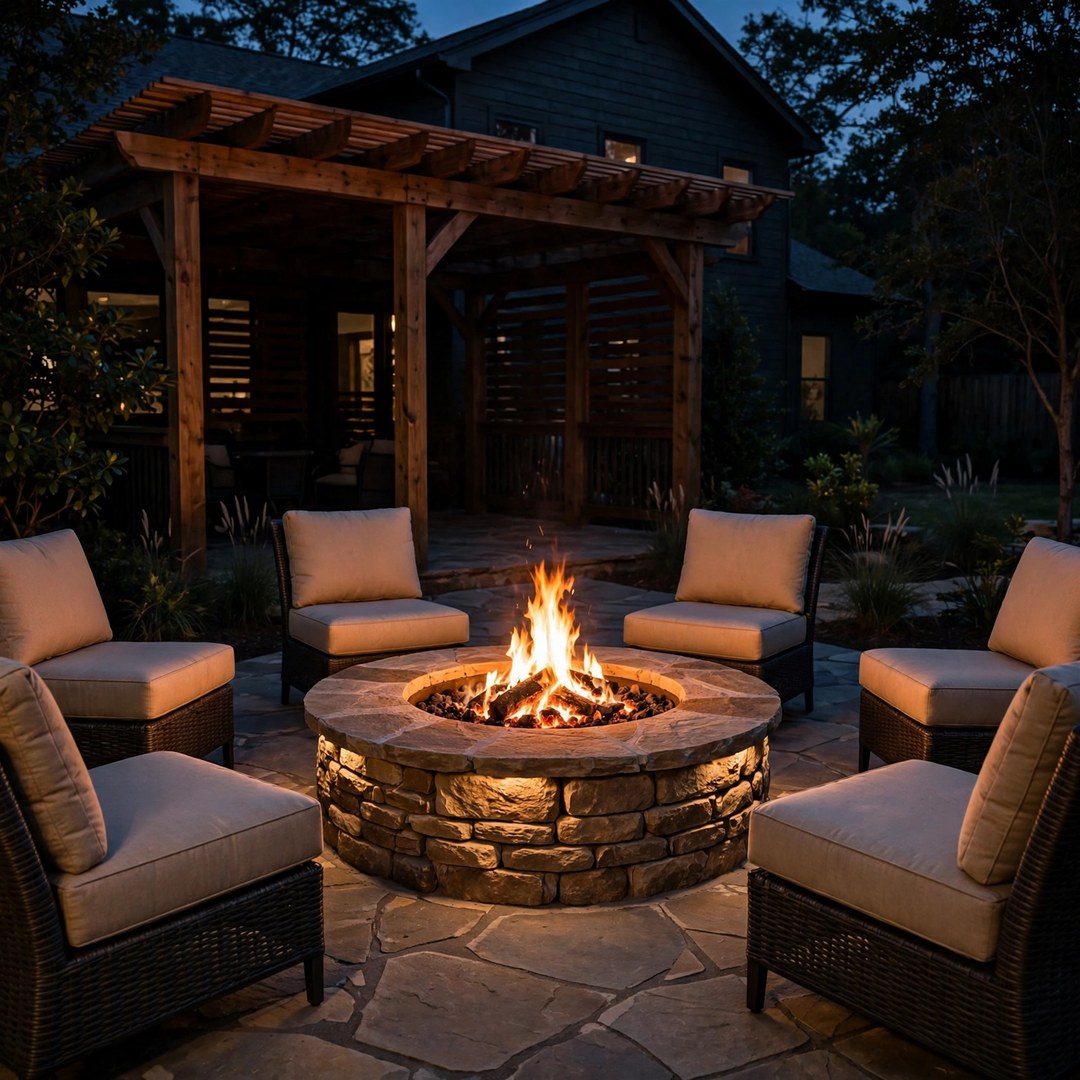
Where the pit goes
A fire pit is small, but its placement decides whether it gets used every week or twice a year. Distance from the house, cover posts, seating, and property line is set at the design visit, along with how the wind moves through the yard.
Too close to the house and heat and sparks crowd the wall. Too close to the property line and it crowds the neighbors. Under a cover, the pit stays clear of the posts and roof edge. When placement is right, the fire sits in the middle of the seating with room to walk behind the chairs and tend the fire from any side. For a larger build with a chimney, see our Outdoor Fireplaces page.
One crew, start to finish
Splitting the pit and the surrounding patio work between two companies is how pits end up where the chairs should go and gas lines end up on the wrong side of the yard.
When a pit is part of a larger build, our crews run it with the cover and kitchen as one project, in the correct order: footings and lines first, then stone, with one design, one written price, and one final walkthrough.
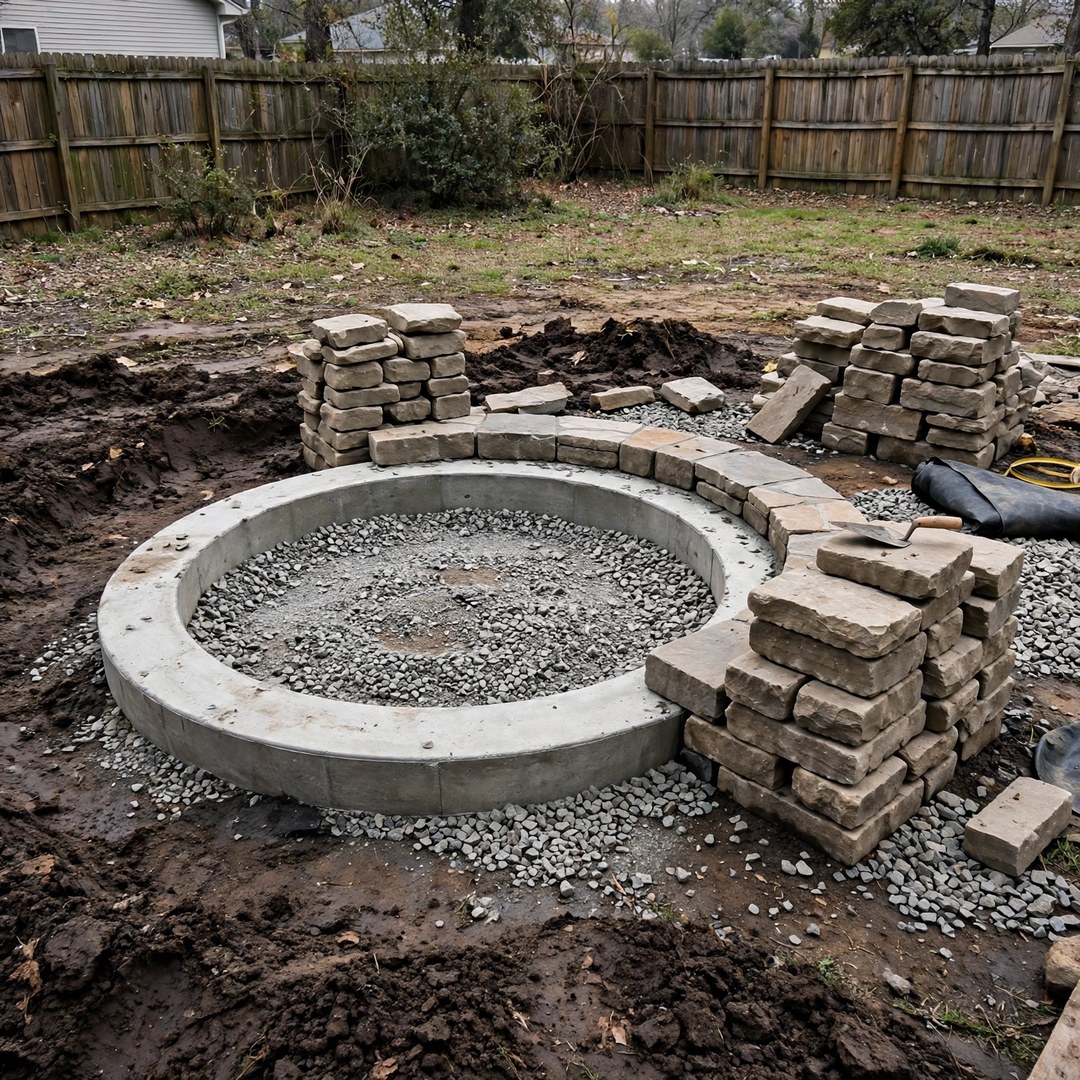
How a fire pit project runs
We measure the patio, discuss size and gas or wood, and place the pit and seating together.
The stone, bowl, and any gas line are drawn and priced in a single written proposal.
We confirm city permit requirements and help with HOA approval before any work begins.
Footing first, then stone and bowl. We light the first fire with you at the end.
When fire pits shine
Around sundown on a cool evening, when the family drifts toward the fire without being called, is when these pits earn their keep.
The fire is lit, the chairs are in their circle, and conversation happens without anyone having to shout across the yard. That is the picture most Denton homeowners describe at the first visit, and the placement is built around it.
Tell us what a good evening looks like at your house and we will design the pit that fits it. Call 972-893-3385.
From our Denton office
We are based in Denton and build fire pits across the surrounding communities, including Corinth, Lake Dallas, Argyle, Flower Mound, Highland Village, Lewisville, Lantana, Krum, Roanoke, and Justin.
If your town is not listed, call 972-893-3385 and we will confirm whether your address falls inside our current service area.
Independent profiles you can check
Denton Patio Covers is a division of The JBN Group, Inc. You can research the parent company on these independent profiles before you call.






Questions Denton homeowners ask
Size follows the seating. A pit for two or three chairs stays smaller and closer. A pit inside a seating wall for a larger group runs wider, with a cap broad enough to hold drinks. Wood pits are usually a bit larger than gas because logs need more room. We size the bowl and surround to your chairs and patio at the design visit.
Yes. A gas pit connects to the home’s gas supply with a dedicated line. The right time to run it is during the build, before the surround closes in. We include the line as part of the project and test it before the first fire. A wood pit needs no line, only dry storage for firewood.
Very little. Scoop ash from a wood pit as needed, keep the bowl drained, and use a cover when the pit sits idle through wet weather. A gas pit mainly needs occasional inspection of the burner and line. The stone itself requires almost no maintenance most years. Open joints can be repointed without rebuilding the surround.
Yes. A standalone pit can be added to an existing patio at any time and is one of the simpler builds we do. It lands better and usually costs less when planned with a cover or kitchen project, because the footing and any gas line go in before the surrounding work closes up. Adding later still works well.
One written price, no pressure
Book a patio visit. We will measure the space, discuss size, placement, and gas or wood, and leave you with a clear design and one written price.